In today’s connected world, protecting your digital identity is more critical than ever. With passwords alone no longer offering sufficient protection, Multi-Factor Authentication (MFA) has become a cornerstone of modern cybersecurity. But while MFA significantly reduces the risk of unauthorized access, it’s not without its downsides — especially when users begin to experience what’s now known as MFA fatigue.
What Is MFA?
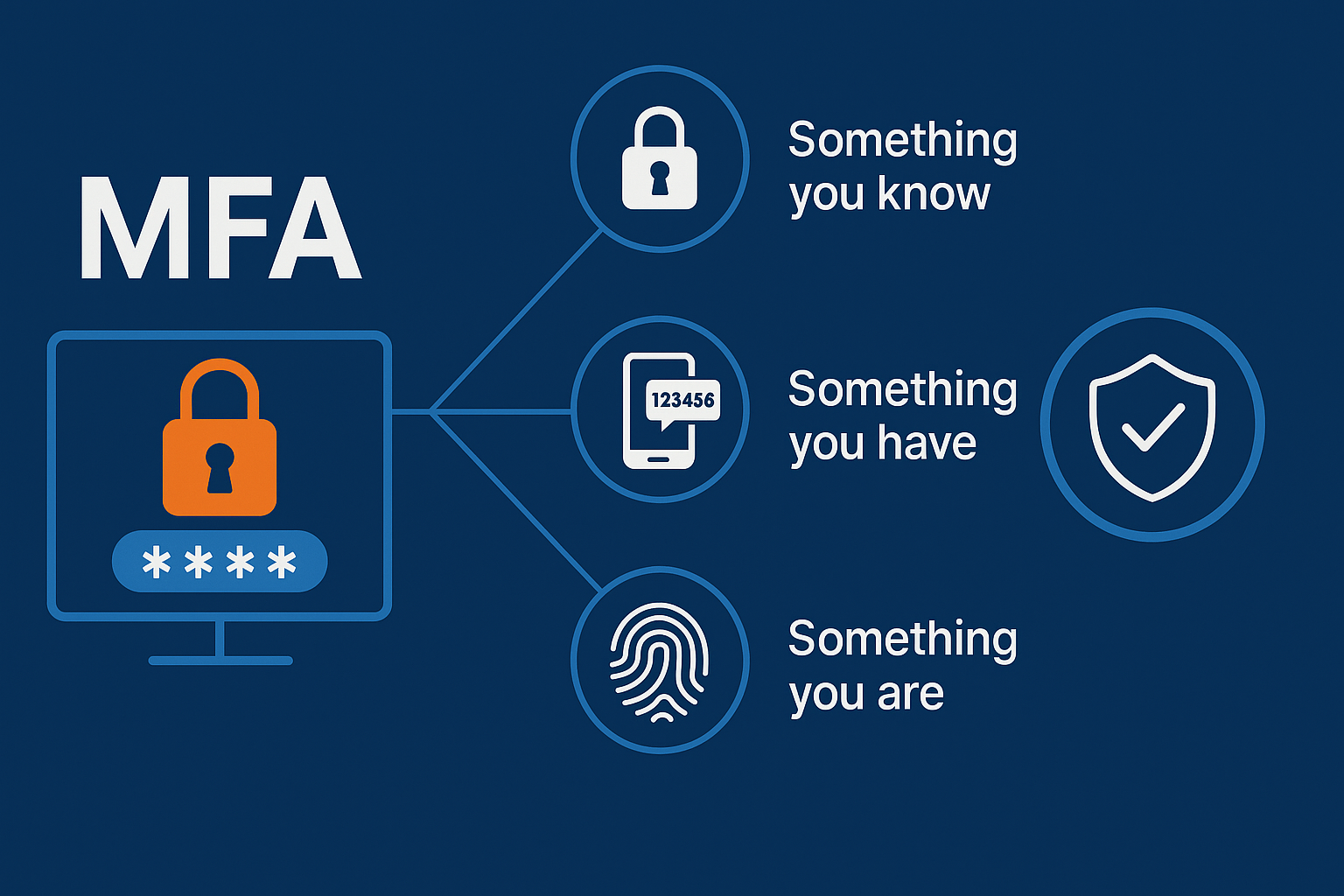
At its core, MFA is a layered security approach that requires users to provide two or more pieces of evidence to verify their identity. These pieces typically fall into three categories:
-
Something you know – like a password or PIN.
-
Something you have – such as a smartphone, token, or security key.
-
Something you are – biometrics like fingerprints, facial recognition, or voice ID.
By combining these factors, MFA creates a much stronger barrier against cybercriminals. Even if a hacker steals your password, they still need the second factor — often a time-sensitive code or push notification — to gain access.
How MFA Protects You
MFA is one of the most effective tools to combat phishing attacks, credential stuffing, and brute-force attempts. It provides:
-
Layered protection: A stolen password alone isn’t enough.
-
Real-time validation: Most MFA systems require immediate confirmation, making it harder for attackers to use stolen credentials.
-
Flexibility: Many solutions support biometrics or physical keys, reducing reliance on SMS codes or emails.
Organizations that implement MFA across their systems often see a ~90% reduction in account compromise incidents.
The Human Side: MFA Fatigue
But even the strongest technology can become vulnerable when people grow tired of it.
MFA fatigue (also known as push fatigue) happens when users are bombarded with repeated authentication prompts — often from attackers deliberately spamming them in hopes they’ll accept one by mistake. Over time, users may:
-
Mindlessly approve prompts just to stop the notifications.
-
Disable MFA altogether if they see it as an inconvenience.
-
Ignore legitimate alerts, thinking they’re part of another spam attempt.
This fatigue not only weakens the intended protection but can also open the door for social engineering attacks, where attackers exploit user frustration to gain access.
Balancing Security and Usability
To truly succeed, MFA must be smart, not just strong. Organizations can mitigate fatigue by:
-
Adopting adaptive MFA: Triggering additional verification only when the login is suspicious (e.g., new device, location, or time).
-
Using phishing-resistant methods: Hardware keys or FIDO2-based authentication reduce human error.
-
Educating users: Teaching them to recognize abnormal prompts and report them.
-
Simplifying workflows: Integrating MFA into single sign-on (SSO) platforms to reduce redundant logins.
MFA remains a crucial defense in the cybersecurity toolkit — but like any tool, it’s most effective when used thoughtfully. Balancing strong authentication with user experience helps ensure that security doesn’t become a source of frustration. After all, the best security control isn’t the one that’s just hardest to break — it’s the one that people actually use correctly, every day.
Comments (0)
No comments yet. Be the first to comment!









Leave a Comment